
Raising a garage door height can create valuable overhead clearance for taller vehicles, additional storage, or a more functional garage workspace. However, the process is more involved than simply moving the existing door tracks upward. In many garages, raising the effective opening height requires a high-lift conversion, adjustments to the spring and cable system, and changes to the garage door opener setup.
The cost to raise garage door height depends on several factors, including the amount of additional clearance needed, available headroom, the type and condition of the existing garage door, hardware requirements, and the complexity of the installation. At Door Dorks, we recommend evaluating the complete garage door system before deciding how much additional height can safely be created.
| Garage Door Height Project | What It Typically Involves | Main Considerations |
| Minor height adjustment | Track and hardware adjustments | Available headroom and existing setup |
| High-lift conversion | Higher horizontal tracks and modified lift system | Ceiling clearance and door travel |
| Taller vehicle clearance | Increased door travel and overhead space | Vehicle height and opening dimensions |
| Major modification | New tracks, springs, cables, drums, and opener adjustments | Garage structure and system compatibility |
| Structural opening change | Modifying the existing garage opening | Header, fascia, framing, and local requirements |
What Does It Mean to Raise a Garage Door Height?
A garage door can sometimes be positioned higher inside the garage without rebuilding the entire exterior opening. This is commonly accomplished through a high-lift garage door conversion.
With a standard garage door configuration, the door travels vertically and then moves along horizontal tracks near the ceiling. A high-lift system changes the point where the door transitions from vertical movement to horizontal movement. The horizontal tracks are installed higher, allowing the garage door to sit closer to the ceiling when it is fully open.
For example, a standard 7-foot garage door may potentially be configured to provide substantially more overhead clearance when the garage has enough available headroom. The exact amount varies from one garage to another.
Before we recommend a solution, we look at the door opening, ceiling height, existing tracks, springs, opener, and any objects that could interfere with the new configuration.
How Much Can You Raise a Garage Door?
There is no universal amount that every garage door can be raised. The available space above the existing door opening is one of the most important factors.
A high-lift conversion may allow a standard 7-foot door to gain approximately 24 inches or more of additional effective clearance in a suitable garage. However, this should not be treated as a guaranteed measurement for every installation.
The garage needs sufficient space for the tracks, rollers, springs, drums, cables, and opener components. In many configurations, approximately 12 to 15 inches or more of headroom may be needed above the door opening, depending on the hardware and desired setup.
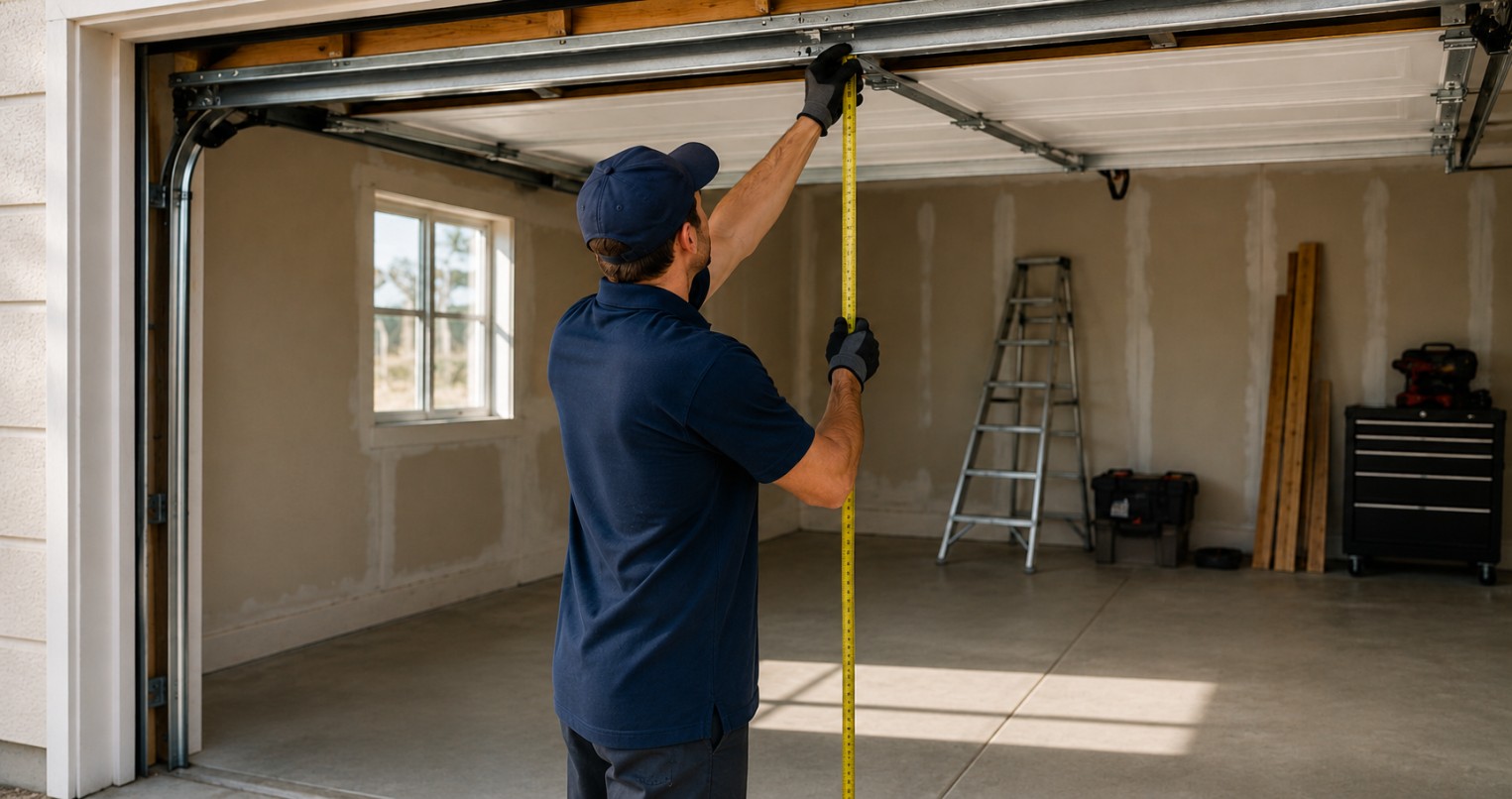
We recommend measuring from the top of the garage door opening to the ceiling before making any decisions.
Why Would You Want to Raise a Garage Door?
Taller Vehicle Clearance
One of the most common reasons homeowners consider raising a garage door is to accommodate a taller vehicle.
Trucks, vans, recreational vehicles, roof racks, and other equipment can require more vertical clearance than a conventional garage provides. Raising the effective door height can make entering and exiting the garage easier and reduce the risk of the vehicle or equipment contacting the door.
More Overhead Storage
A garage with additional vertical clearance can provide more flexibility for storage.
Depending on the garage layout, homeowners may want to install overhead storage racks, shelving systems, or equipment storage. A higher door configuration can help make better use of vertical space while keeping the door travel clear.
Vehicle Lift or Workshop Use
Some homeowners use their garages as workshops or automotive spaces. A taller door can make it easier to work with larger vehicles or install equipment that requires additional overhead clearance.
Before adding a vehicle lift or other equipment, however, we recommend confirming the total ceiling height and door travel requirements.
Creating a More Functional Garage
A garage can become crowded when the door occupies valuable overhead space. A high-lift configuration may reposition the door closer to the ceiling and create a more useful area underneath.
What Determines the Cost to Raise Garage Door Height?
Several factors influence the overall project cost.
Available Headroom
Headroom is one of the biggest considerations. A garage with plenty of space between the top of the door opening and ceiling may be a good candidate for a high-lift conversion.
If there is limited space, the available options may be more restricted.
Door Size and Weight
The size, construction, and weight of the garage door affect the hardware required for the conversion.
A larger or heavier door may require appropriately rated springs, cables, drums, and other components. We always consider the entire system rather than treating the tracks as an isolated component.
Track Configuration
High-lift conversions require different track positioning than conventional garage door systems.
The new track arrangement needs to provide smooth door travel without creating interference with the ceiling, lights, storage equipment, or other components.
Springs, Cables, and Drums
Changing how far and how high a garage door travels can affect the balance of the entire system.
Depending on the installation, new or repositioned springs, cables, and drums may be necessary. These components work together to counterbalance the weight of the door, so they need to be correctly matched and adjusted.
Garage Door Opener
The existing opener may also require adjustment.
When the door’s travel path changes, the opener arm and travel settings may no longer work correctly with the new configuration. In some installations, modifications or different opener hardware may be necessary.
Structural Modifications
A high-lift conversion does not always require structural changes. However, if the goal is to physically increase the size of the garage door opening rather than simply reposition the door’s travel path, the project can become more extensive.
Changes involving the header, framing, fascia, or exterior opening should be evaluated carefully and may involve local building requirements.
How to Check Whether Your Garage Can Support a Higher Door
Before planning a high-lift conversion, we recommend checking several measurements and conditions.
Measure the Headroom
Measure from the top of the garage door opening to the ceiling. Also measure the space around the existing tracks and opener.
Don’t forget to account for ceiling-mounted lights, beams, storage racks, ductwork, or other obstructions.
Check the Door’s Condition
A high-lift conversion is usually not the best time to ignore an aging or damaged garage door.
We inspect the rollers, hinges, tracks, cables, drums, springs, and other components to determine whether they are suitable for the planned configuration.
Consider Your Required Clearance
Think about why you want the door raised.
If the goal is to accommodate a specific truck or van, measure the vehicle’s total height, including roof racks or other equipment. This provides a more practical target than simply choosing the maximum possible door height.
Review Local Requirements
If the project involves changing the physical size of the garage opening or modifying structural components, local building requirements may apply.
We recommend checking applicable requirements before beginning significant structural work.
How a High-Lift Conversion Works
A high-lift conversion changes the garage door’s path rather than necessarily replacing the entire door.
First, the existing configuration is evaluated. The appropriate track height and available ceiling space are determined. Higher horizontal tracks can then be installed so that the door travels upward farther before moving horizontally.
Depending on the setup, the springs, drums, cables, rollers, and opener may need to be adjusted or replaced.
The final goal is a balanced door that opens smoothly, stays properly supported, and operates safely.
Should You Raise a Garage Door Yourself?
Some garage door adjustments may look straightforward, but high-lift conversions involve components under significant tension.
Garage door springs, cables, drums, and other hardware can create serious hazards if they are incorrectly installed or adjusted.
For that reason, we recommend professional installation rather than attempting to reposition the entire system without the appropriate experience and equipment.
At Door Dorks, we can assess the existing configuration, determine whether a high-lift conversion is practical, and identify the components that may need to be changed.
High-Lift Conversion vs. Increasing the Garage Opening
It is important to understand that these are two different projects.
A high-lift conversion changes how the existing garage door travels inside the garage. It can provide additional usable clearance without necessarily changing the exterior opening.
Increasing the physical height of the garage opening is a larger project. It can involve structural framing, the header, exterior finishes, and potentially a replacement garage door.
If your goal is simply to accommodate a taller vehicle, a high-lift conversion may be worth investigating before considering major structural modifications.
How We Approach Garage Door Height Modifications
At Door Dorks, we start by evaluating the complete garage door system rather than focusing only on the desired height.
We consider the existing opening, ceiling clearance, door dimensions, track configuration, spring system, opener, and potential obstructions. We then determine what type of modification may be appropriate for the garage.
Our goal is to help homeowners understand what is realistically possible before work begins. The right solution should provide the needed clearance while maintaining reliable and safe garage door operation.
Frequently Asked Questions
1. Can I raise my existing garage door without replacing it?
In some garages, yes. A high-lift conversion can reposition the track system so the existing door travels higher inside the garage. Whether this is possible depends on the door, available headroom, hardware, and overall configuration.
2. How much headroom is needed to raise a garage door?
The required headroom varies by door and high-lift configuration. Many installations require roughly 12 to 15 inches or more above the door opening, but the exact requirement should be measured based on the hardware and desired lift.
3. Can raising a garage door help with a tall truck?
Yes, potentially. A high-lift configuration can increase usable clearance for taller vehicles, including trucks and vans. We recommend measuring the complete vehicle height, including roof-mounted equipment, before determining the required clearance.
4. Does raising a garage door require a new opener?
Not always. The existing opener may sometimes be adjusted or modified, while other installations may require different opener hardware. The answer depends on the new track configuration and opener setup.
5. Is it safe to install a high-lift garage door system myself?
Because the conversion can involve springs, cables, drums, tracks, and other components under tension, professional installation is recommended. We can evaluate the garage and determine the appropriate configuration before making modifications.
Final Thoughts
The cost to raise garage door height is influenced by much more than the desired number of additional inches. Available headroom, door size, track configuration, spring and cable requirements, opener compatibility, and potential structural modifications all play a role.
A high-lift conversion can be an effective solution when you need additional clearance for a taller vehicle, overhead storage, workshop equipment, or improved garage functionality. However, every garage has different limitations.
We recommend having the complete system evaluated before choosing a configuration. At Door Dorks, we can help determine whether your existing garage door is suitable for a high-lift conversion and explain what modifications may be required for safe and reliable operation.