
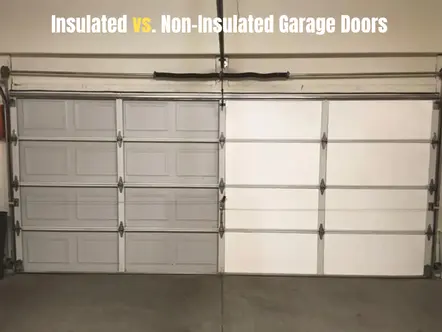
An insulated garage door is worth it if your garage is attached to the house, has a room above or beside it, or doubles as a gym, workshop or storage space. For a detached garage used only for parking, a non-insulated door is usually enough. The difference comes down to the door’s R-value: how well it resists heat moving through it.
This guide explains what R-value means for a garage door, how the two main types of insulation compare, and how to decide what your home needs.
What R-value means on a garage door
R-value measures how well a material resists heat flow. The higher the number, the better the door keeps summer heat out of the garage, or keeps a heated garage warm. Garage door manufacturer Clopay gives these typical ranges in its buying guide:
- Non-insulated steel door: about R-0 to R-2
- Polystyrene-insulated door: typically R-6 to R-9
- Polyurethane-insulated door: Clopay’s Intellicore models range from R-6.3 to R-20.4, depending on the model, thickness and panel style
Check the R-value listed for the exact model you are quoted, not just the word “insulated”.
Polystyrene vs. polyurethane insulation
Most insulated garage doors use one of two foams.
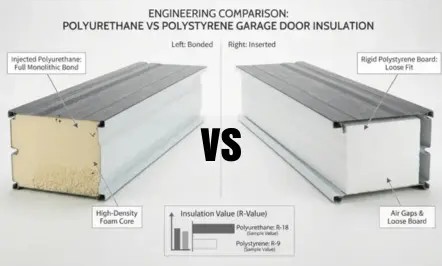
- Polystyrene is the standard insulation in many insulated doors. It gives a real step up from bare steel, typically into the R-6 to R-9 range.
- Polyurethane is injected into each section, where it expands to fill the space and bonds to the inner and outer steel skins. Clopay says its polyurethane doors reach roughly double the R-value of standard single-layer polystyrene doors of comparable thickness.
The bonded foam also makes a door quieter. In Clopay’s own testing, an Intellicore polyurethane door measured 80 decibels against 96 decibels for a standard polystyrene door.
What an insulated door changes in a San Diego County home
San Diego County’s winters are mild, so for most homeowners here the reason to insulate is summer heat, not cold. Inland neighborhoods such as Escondido, San Marcos and Temecula sit farther from the ocean’s cooling influence than coastal towns, and their garages heat up more in summer. An insulated door slows the heat coming through the door itself, which matters most when the garage shares walls with the house.
- Rooms above or beside the garage. Bonus rooms, bedrooms and home offices built over or next to a garage pick up some of its heat. Clopay lists these layouts among the clearest cases for an insulated door.
- Garage gyms and workshops. If you spend time in the garage, a steadier temperature makes a noticeable difference.
- Storage. Paint, electronics and other temperature-sensitive items do better in a garage that doesn’t swing as far.
- Noise. An insulated door dampens sound from the street and from tools or equipment inside.
- Durability. Clopay notes that insulated doors resist dents and warping better than single-layer steel.
There are trade-offs. Insulated doors cost more up front and weigh more. Clopay notes that a heavier door may need a stronger opener, and the springs always have to be matched to the new door’s weight. That’s one reason an insulated door upgrade is a job for an installer rather than a straight swap.
How much R-value do you need?
Clopay’s guidance is R-12 or higher for attached garages and for homes in hot or cold regions. Non-insulated doors make the most sense in mild climates and for detached garages used only for parking.
- Detached garage, used for parking only: a non-insulated door is usually enough, especially near the coast.
- Attached garage near the coast: a polystyrene door is a sensible middle ground for quieter, sturdier operation.
- Attached garage inland, or any garage with a room above it: look for a polyurethane door at R-12 or higher.
- Garage gym, workshop or office: go for the highest R-value that suits your budget and style.
Choosing your new door
When you compare quotes, ask for the R-value of each door, the type of insulation, and whether the springs and opener suit the door’s weight. Door Dorks is a Clopay dealer, and you can browse the styles on our Clopay garage doors page or read more about garage door installation.
Comparing doors for an inland home? Start with our garage door installation Temecula page if you’re in the Temecula Valley, or see garage door installation Escondido if you’re in North County.
Frequently asked questions
Does an insulated garage door lower energy bills?
It can. Clopay notes that reducing heat transfer through the door eases the load on heating and cooling, which matters most when the garage is attached to the house or sits under living space.
Is a non-insulated door ever the better choice?
Yes. For a detached garage used only for parking, especially in a mild coastal climate, a non-insulated door costs less, weighs less and is simpler to maintain.
Will an insulated door need a new opener?
Not always, but it might. Insulated doors are heavier, and Clopay notes that some need a stronger opener. The springs must be sized for the new door either way.
What’s the difference between polystyrene and polyurethane?
Polystyrene is the standard foam in many insulated doors, typically R-6 to R-9. Polyurethane is injected, fills each section completely and bonds to the steel, giving higher R-values for the same thickness.
Talk to us about a new door
Door Dorks installs garage doors across San Diego County and Temecula. Call (760) 807-1699 or book a visit online.