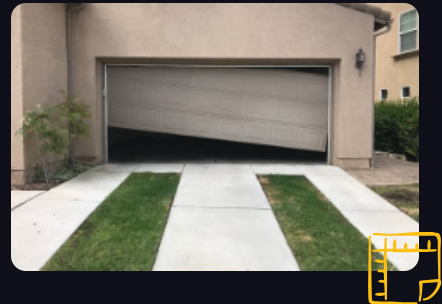

Your garage door has been serving you without complaints for years. Suddenly, one day, you open it and it makes an annoying noise. Several questions rush to mind. Is it just a lack of greasing? Is my garage door damaged? Will it need repair or replacement? Is it a sign of an upcoming problem?
Most garage door noise problems have simple fixes. Some you can handle yourself in under an hour. Others need a pro.
Read on to know more about it.
7 Common Causes of a Loud Garage Door And Their Fixes
1. Lack of Lubrication
A squeaky garage door is most commonly due to a lack of lubrication. When metal parts rub against each other, they wear. Without proper lubrication, that friction turns into noise fast.
The fix: If it is just lubrication, it can be fixed with a garage door lubricant spray. It can be easily applied to hinges, rollers, springs and tracks to remove the noise.
2. Worn or Damaged Rollers
Rollers are placed along the tracks. These guide the door up and down. When they wear out, they make a rattling sound.
The fix: Inspect your rollers closely. If they have a crack, replace them. Steel rollers are loud by nature. You can think of upgrading them to nylon rollers. It is a great long-term fix for a quieter door.
3. Loose Hardware
A garage door has nuts, bolts, brackets and many other parts. They vibrate during the operation. Daily use loosens them. Loose hardware causes noise.
The fix: Check every visible bolt and nut. Tighten anything loose.
4. Worn or Unbalanced Springs
Garage door springs take the complete load of the door. With repeated use, they wear out. They turn the door into a loud garage door that rattles.
The fix: Such a garage door noise problem would indicate a worn or broken spring. Springs handle a lot of tension. These are dangerous to handle without proper training. In such a situation, call a professional.
5. Bent or Dirty Tracks
The metal tracks guide your door up and down. When these tracks get bent, clogged or misaligned, the door drags. This creates squeaky noises.
The fix: Clear any debris on the tracks. Check for bends or gaps. For huge misalignment, call the expert.
6. Old or Worn Opener
The garage door opener gets worn out over time. It becomes extremely noisy in such a situation. It makes rattle, hum and banging noise.
The fix: If your opener is 10 to 15 years old, consider replacement. Call a professional.
7. Loose or Damaged Panels
Garage door panels become loose over time. When a panel is loose, it vibrates and rattles.
The fix: Check each panel by hand for any movement or flex. Replace the panel if it is cracked or damaged.
DIY Garage Door Noise Fixes You Can Try Today
A noisy garage door can be fixed with these small steps in certain cases:
Lubrication – Use a silicone-based garage door spray on all moving parts. Spray it over the hinges, rollers, springs and the top of the tracks. Do this every six months.
Tighten all the hardware – Grab a socket wrench and go bolt by bolt. It takes 15 minutes and often eliminates rattling completely.
Add a nylon roller upgrade – Steel rollers are loud. Nylon rollers run quietly and smoothly. You can swap them out yourself with basic tools.
Check the door balance – Disconnect the opener. Try to lift the door halfway manually. If it doesn’t hold, the springs are unbalanced. This one needs a pro.
Inspect the weatherstripping – Old or torn weatherstripping can cause slapping and vibrating sounds. Replacing it is cheap and easy.
When a Noisy Garage Door Means You Need Professional Repair
Some fixes are genuinely DIY-friendly. Others aren’t. Pushing through on the wrong ones can make things worse or get someone hurt.
Call a professional when you notice any of these:
- Loud popping or snapping from the springs — torsion springs are under massive tension and can cause serious injury if they snap during DIY handling
- The door is grinding along the tracks — this usually means significant misalignment or track damage
- The door is suddenly off-balance — an unbalanced door puts strain on every other component and can drop unexpectedly
- The opener is making burning or electrical smells — stop using it immediately
- The door shakes or jerks during operation — often a sign of cable or drum issues that need trained hands
A garage door making loud noise after a long period of quiet operation is your door telling you something has changed. Don’t ignore it.
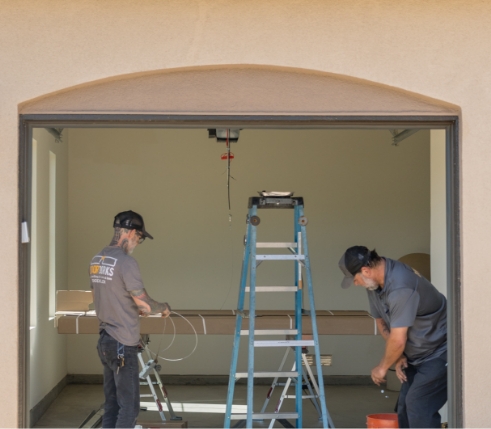
Door Dorks handles all of these Garage door repairs quickly and safely. Our team diagnoses the real cause of the noise instead of just treating the symptoms.
How to Keep Your Garage Door Running Quietly for Years
Lubricate every six months. Set a reminder. It takes 10 minutes and keeps friction — and noise — from building up.
Inspect hardware seasonally. Loose bolts and worn rollers are easy to catch early before they turn into bigger problems.
Test the balance twice a year. Disconnect the opener, lift the door manually to waist height, and let go. It should stay put. If it drops or rises, the springs need adjustment.
Keep the tracks clean. Wipe them down with a dry cloth regularly. Don’t lubricate the tracks themselves — that actually causes more problems.
Listen to your door. Listen closely to figure out which part is making the noise.
Schedule a professional inspection once a year. Door Dorks offers routine maintenance checks and detailed inspections of garage doors. A yearly maintenance keeps your garage door running smoothly for longer.
FAQs
Is a loud garage door dangerous?
It can be. If you hear a loud noise coming from your garage door, it can be anything from wear and tear to a broken part that needs urgent replacement. When in doubt, call Door Dorks garage door experts.
How much does it cost to fix a noisy garage door in San Diego?
It depends on the cause. Basic lubrication and hardware tightening costs almost nothing. Roller replacement runs $100–$200. Spring replacement typically falls between $150 and $350. A full opener replacement can range from $300–$600 installed.
What is the best lubricant for a squeaky garage door?
Use a silicone-based or white lithium grease spray made specifically for garage doors. Avoid WD-40 — it’s a cleaner, not a lubricant, and it attracts dirt over time. Apply to hinges, rollers, springs, and the top of the tracks only.
Are belt drive openers quieter than chain drive openers?
Yes. Chain drive openers are common and the loudest. Belt drive openers use a rubber belt instead of a metal chain. Thus, the noise reduces.